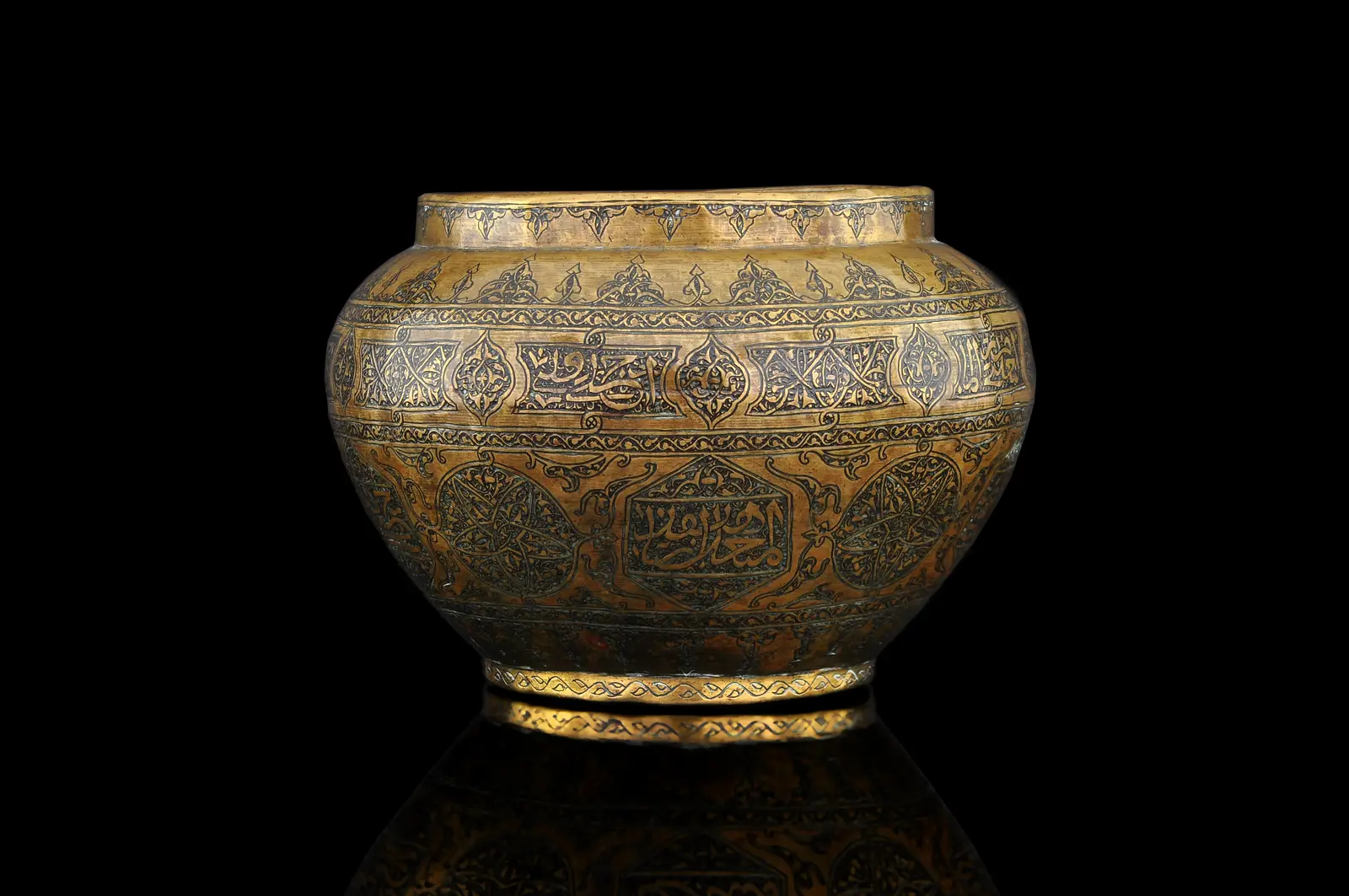
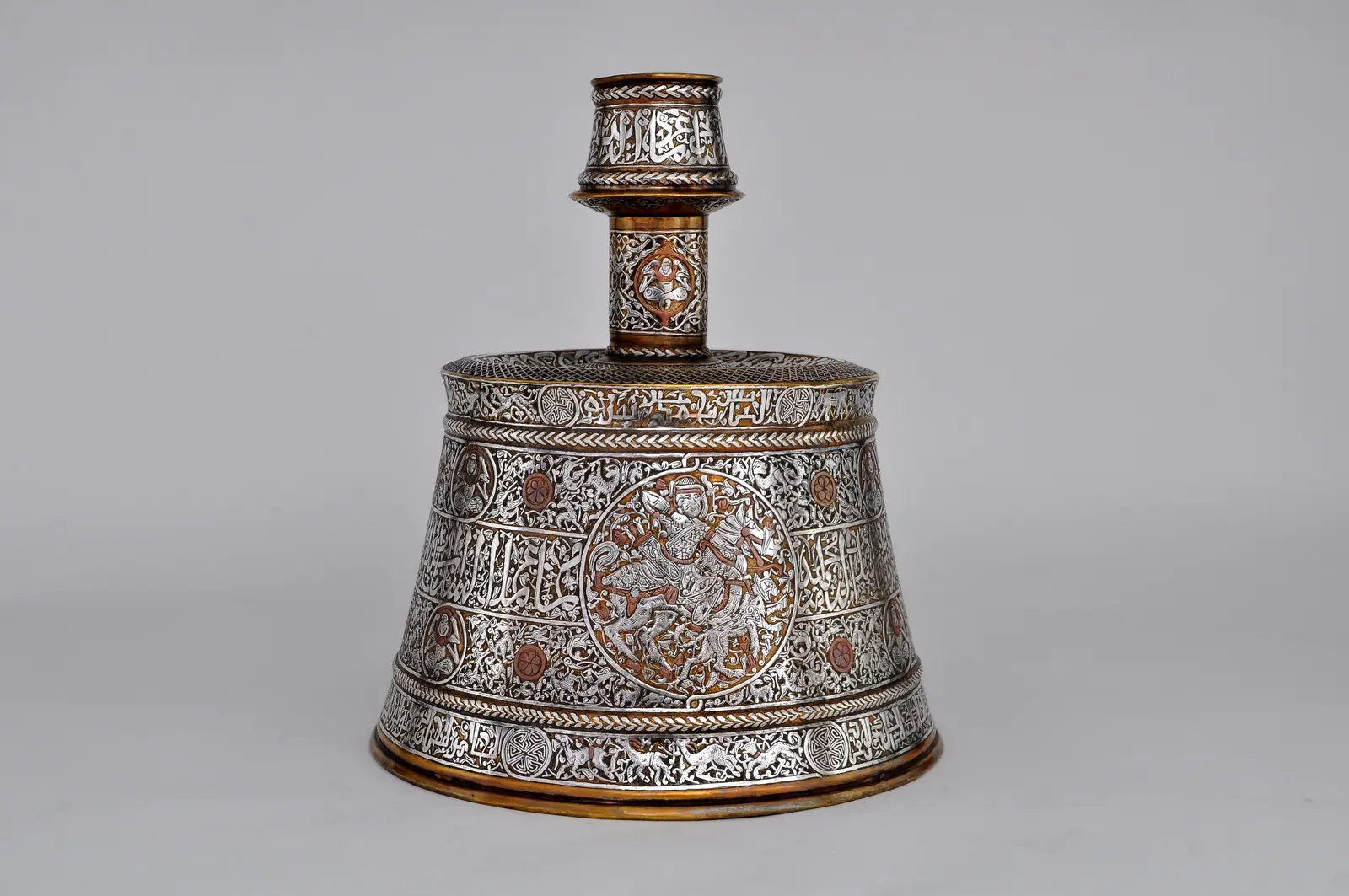
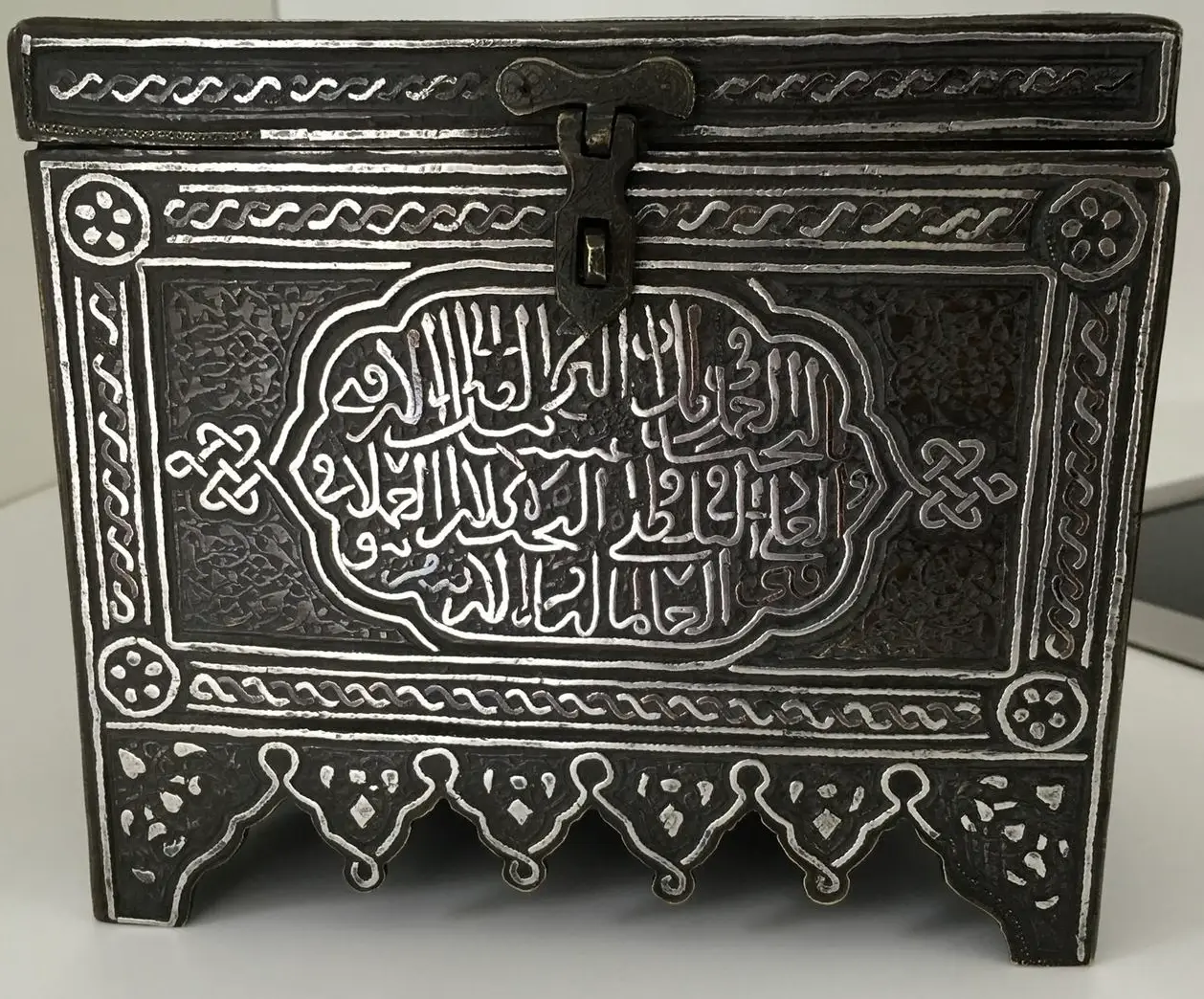
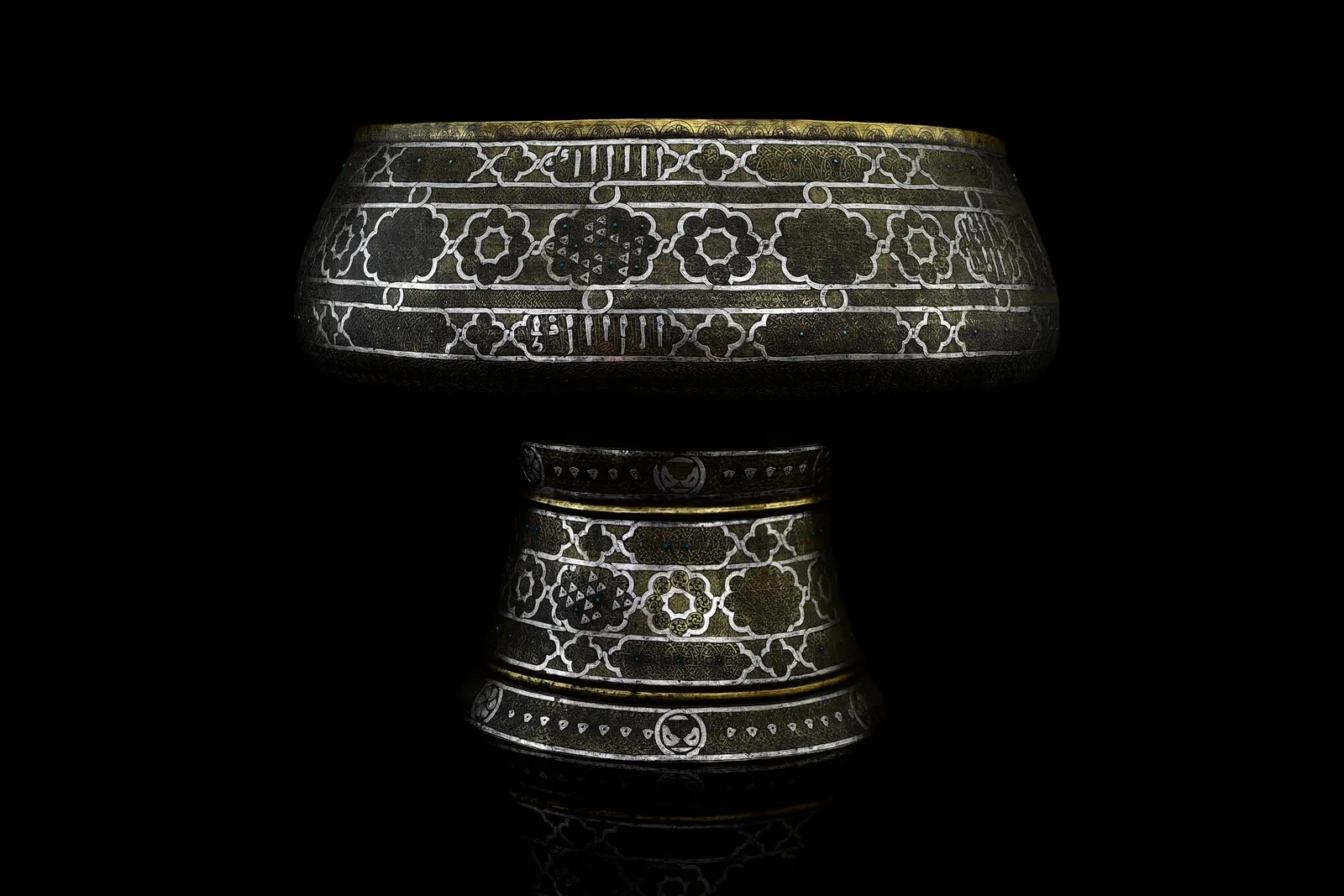
Gallery of The Collection
Hover to pause • Click to enlarge • Drag to scroll
What did metalworkers make, and how were objects used?
Object types reveal use. A basin may relate to washing, display, gift exchange, or ritual. A candlestick carries light and patronage. A pen box speaks to bureaucracy and literacy. An astrolabe combines science, devotion, and precision craft.
Eight Object Categories
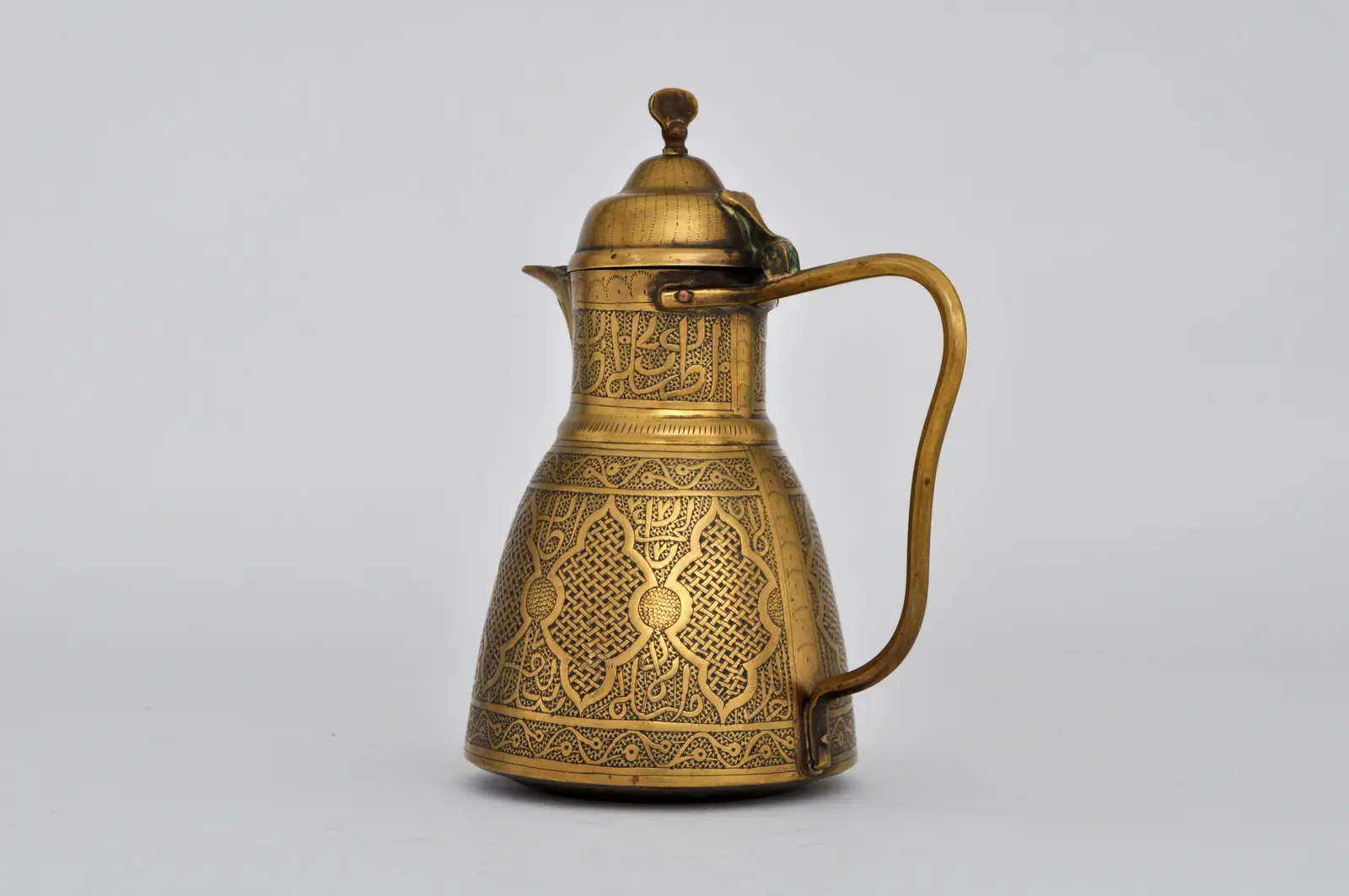
Ewers, Jugs, Aquamaniles and Water Vessels
Pouring vessels: water, etiquette, inscription, and display.
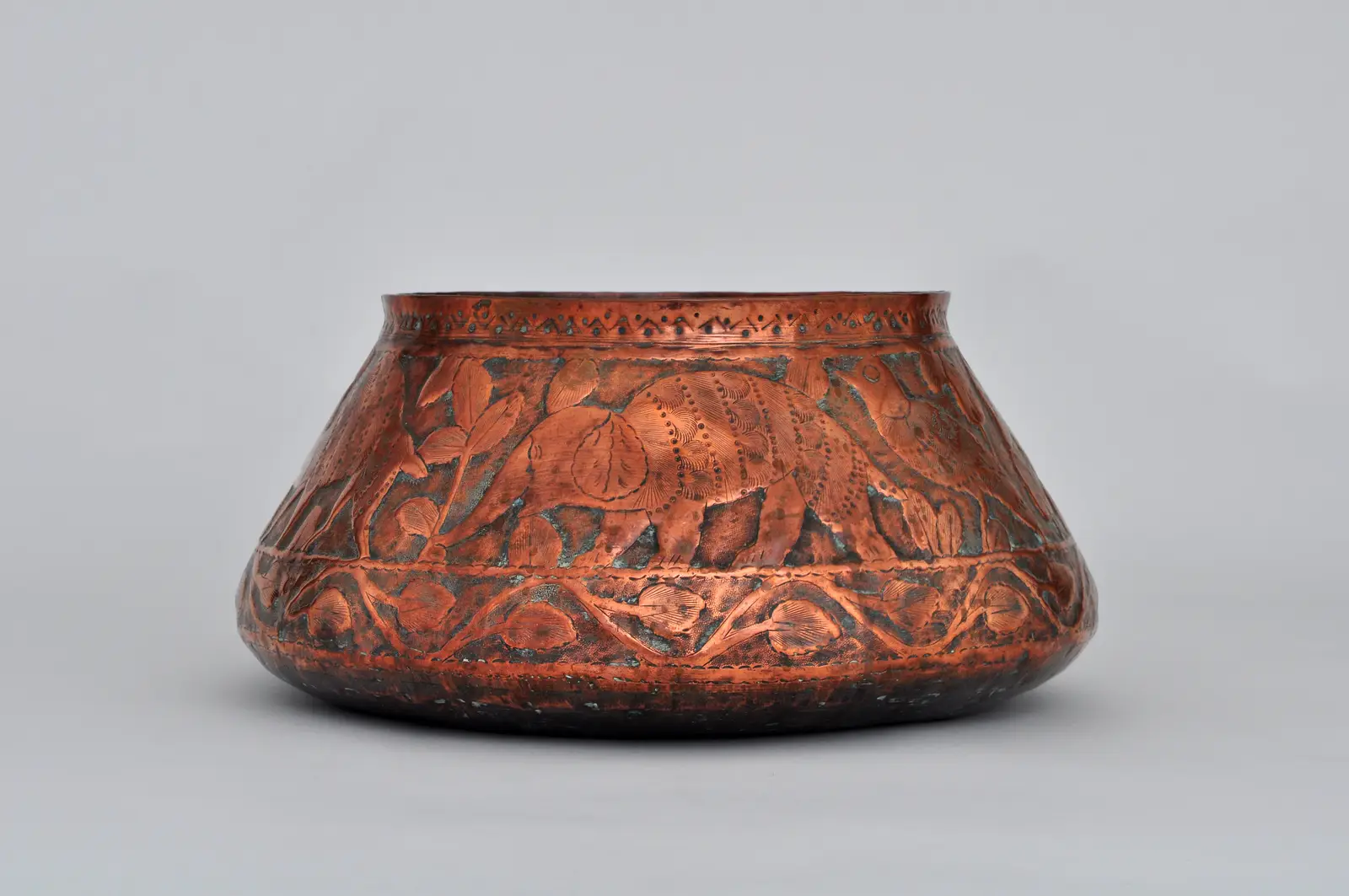
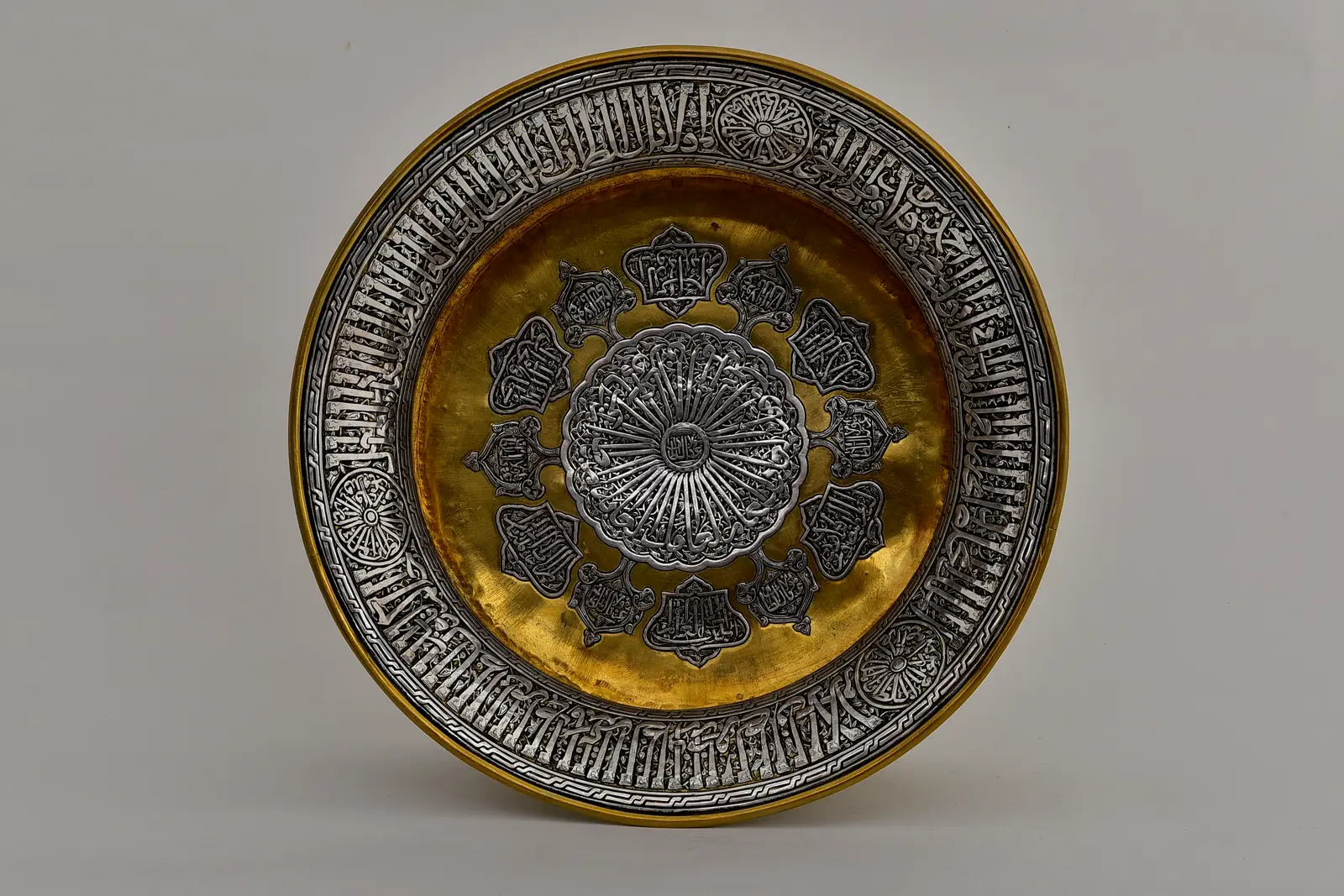
Basins, Bowls, Trays and Ablution Sets
Open vessels for washing, serving, astronomy, blessing, and power.
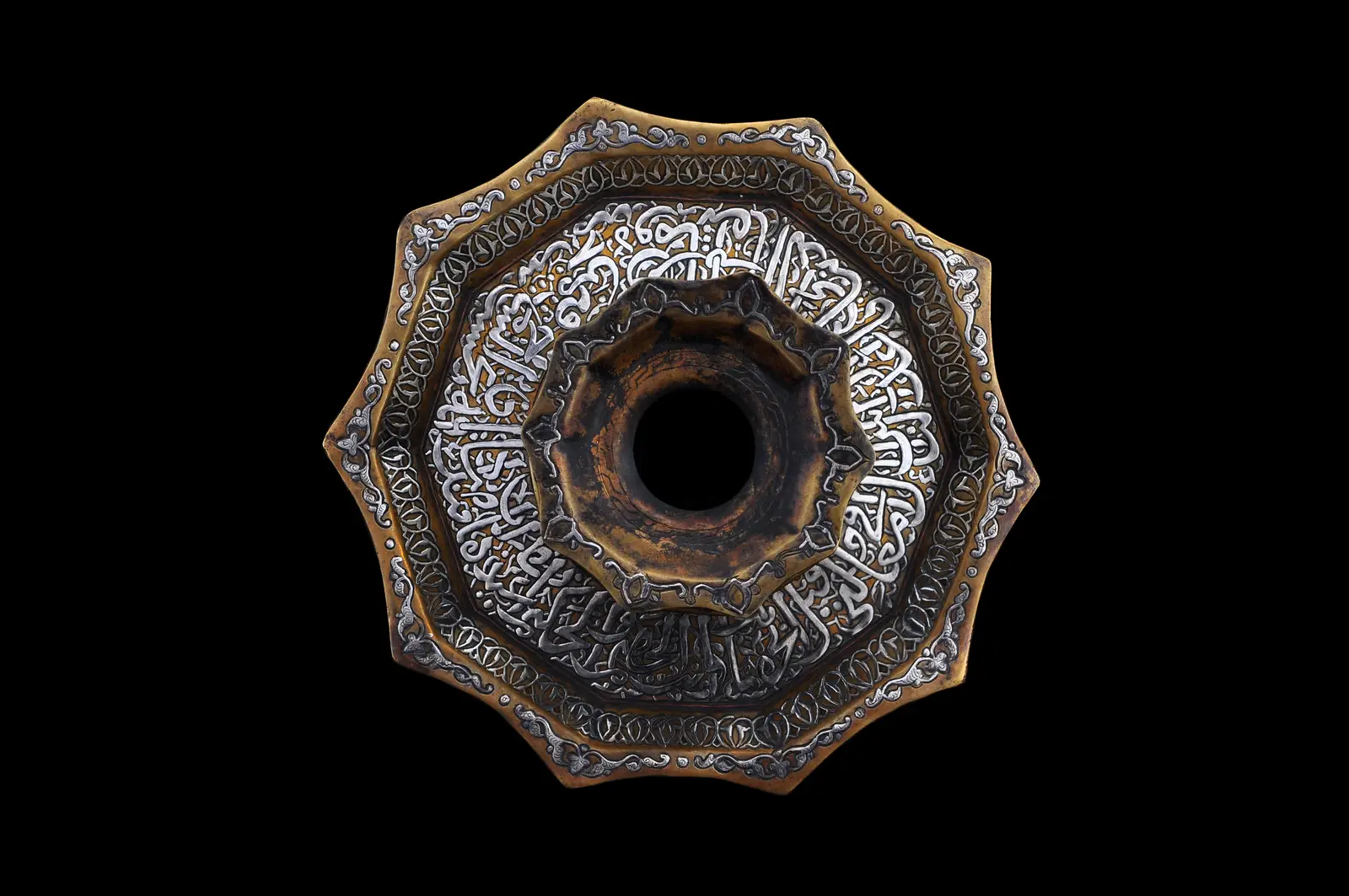
Candlesticks, Lamps and Mosque Furnishings
Metalwork that carries light.
Boxes, Caskets, Pen Cases and Writing Tools
Metal containers for writing, memory, gifts, and guarded contents.
Scientific Instruments and Measuring Devices
Precision metalwork for stars, time, direction, and knowledge.
Weapons, Armor and Horse Gear
Metalwork of protection, ceremony, rank, and movement.
Jewelry, Amulets, Coins and Seals
Small objects, large meanings.
Hospitality Metalware: Coffee, Tea, Incense and Tobacco
Metal objects for scent, taste, smoke, warmth, and welcome.
A Flexible Classification
Objects change function over time. A basin can become a baptismal font; a courtly ewer can enter a church treasury or museum; a weapon can become ceremonial display; a household vessel can become heritage art. The website identifies original, later, and current functions separately when evidence allows.