Gallery of The Collection
Hover to pause • Click to enlarge • Drag to scroll
Every technique begins with material choice.
A metal object is never just metal. Copper, tin, zinc, lead, silver, gold, iron, carbon, mercury, solder, and chemical patinas all carry evidence of geology, trade, recycling, cost, technology, regulation, and taste.
Three Material Families
Copper, Bronze, Brass and High-Tin Bronzes
The copper-alloy family: warm color, durable form, and endless surface possibilities.
Precious Metals: Gold, Silver and Alloy Economies
Precious metals as wealth, piety, law, display, and shimmer.
Iron, Steel and Zinc Alloys
Hard metals, dark grounds, and bright inlay including bidriware.
Why Materials Are Historical Evidence
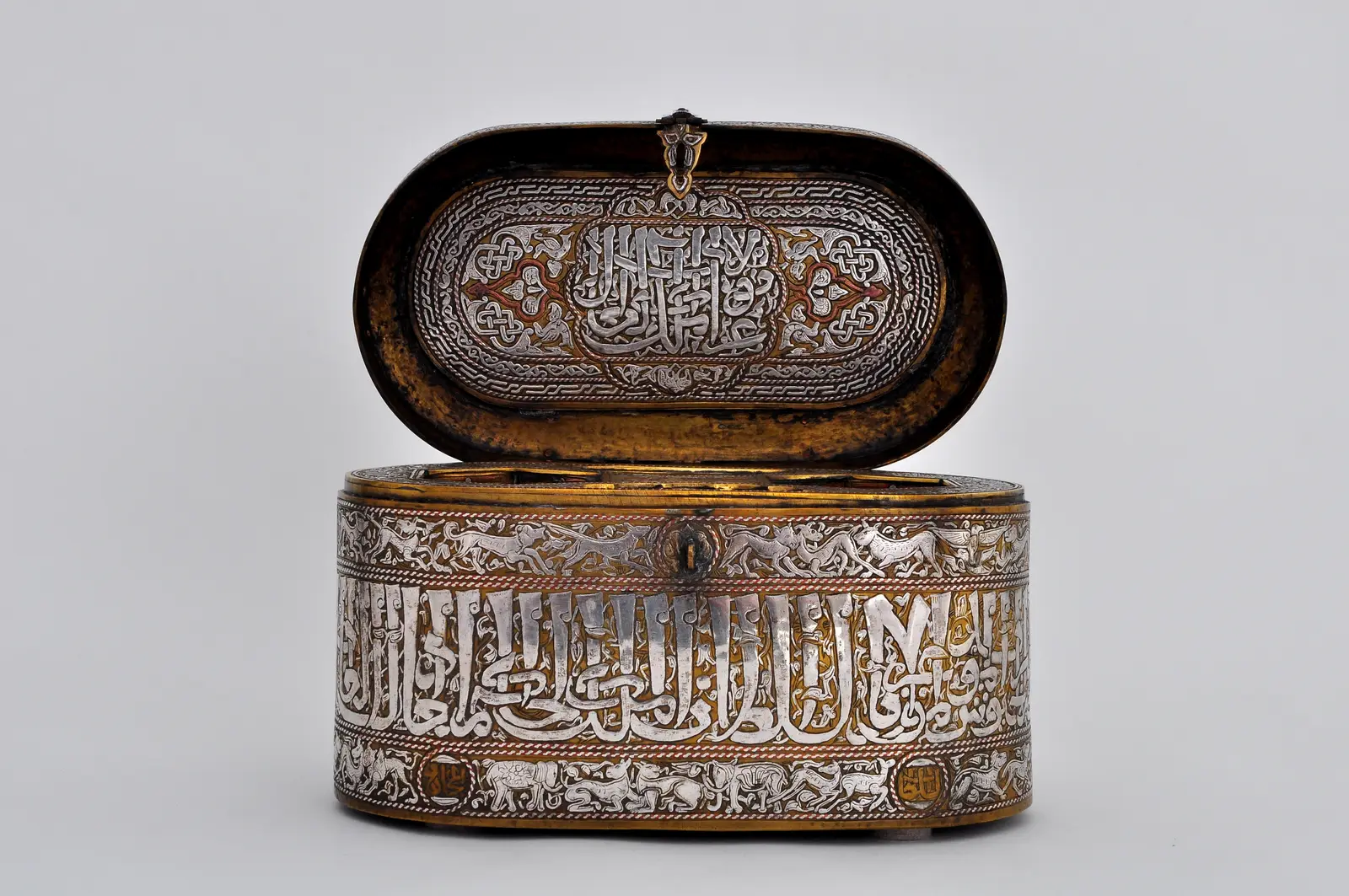
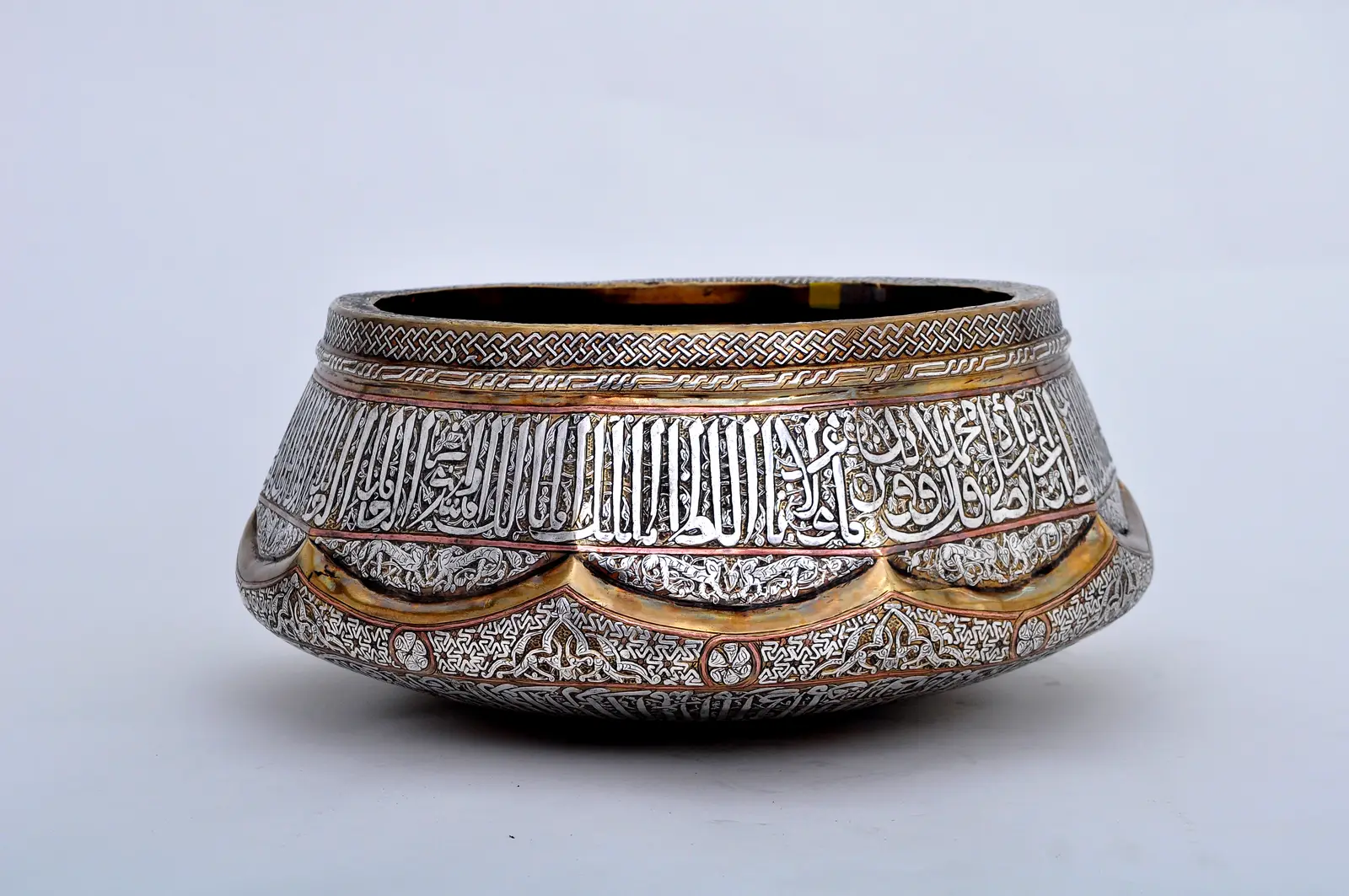
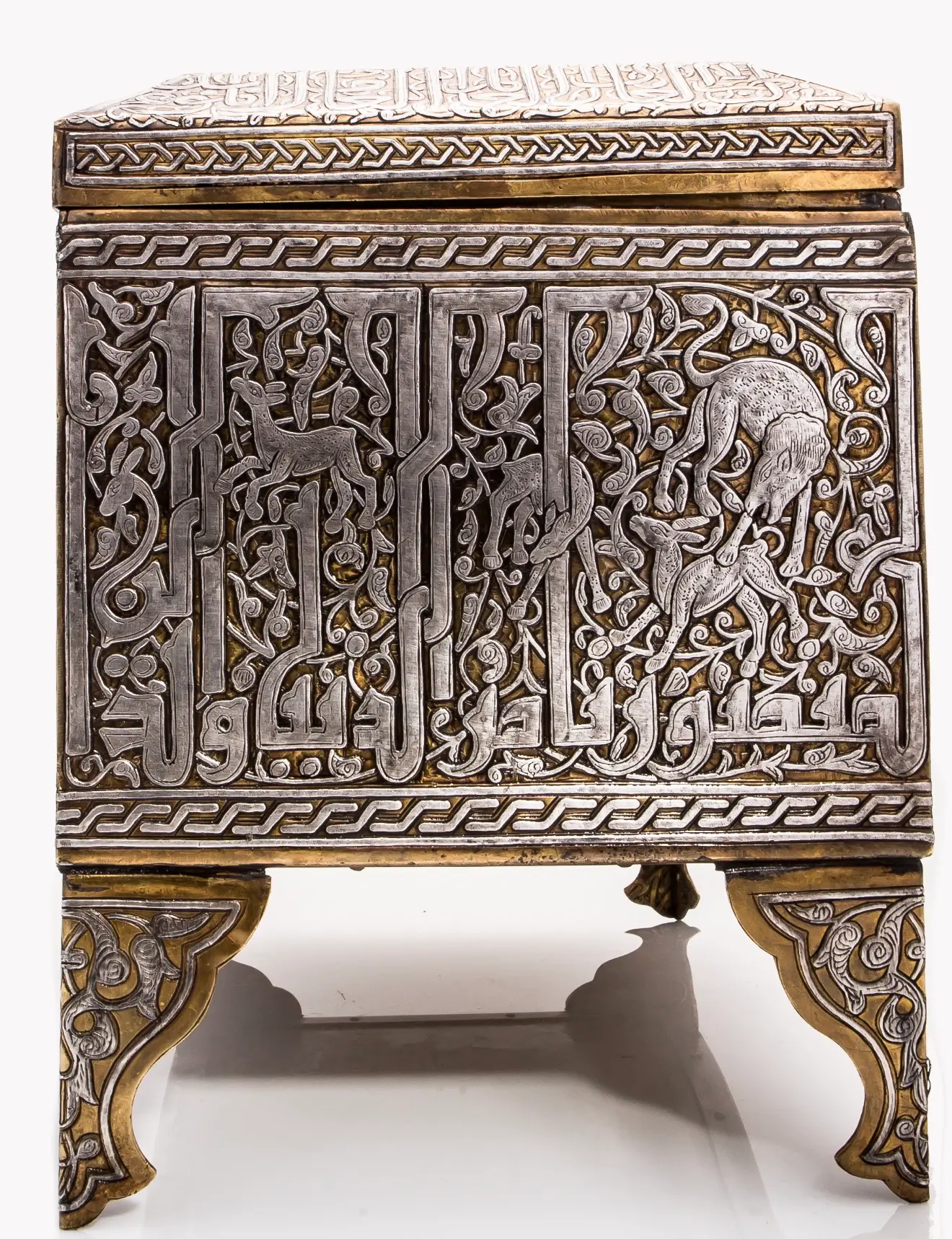
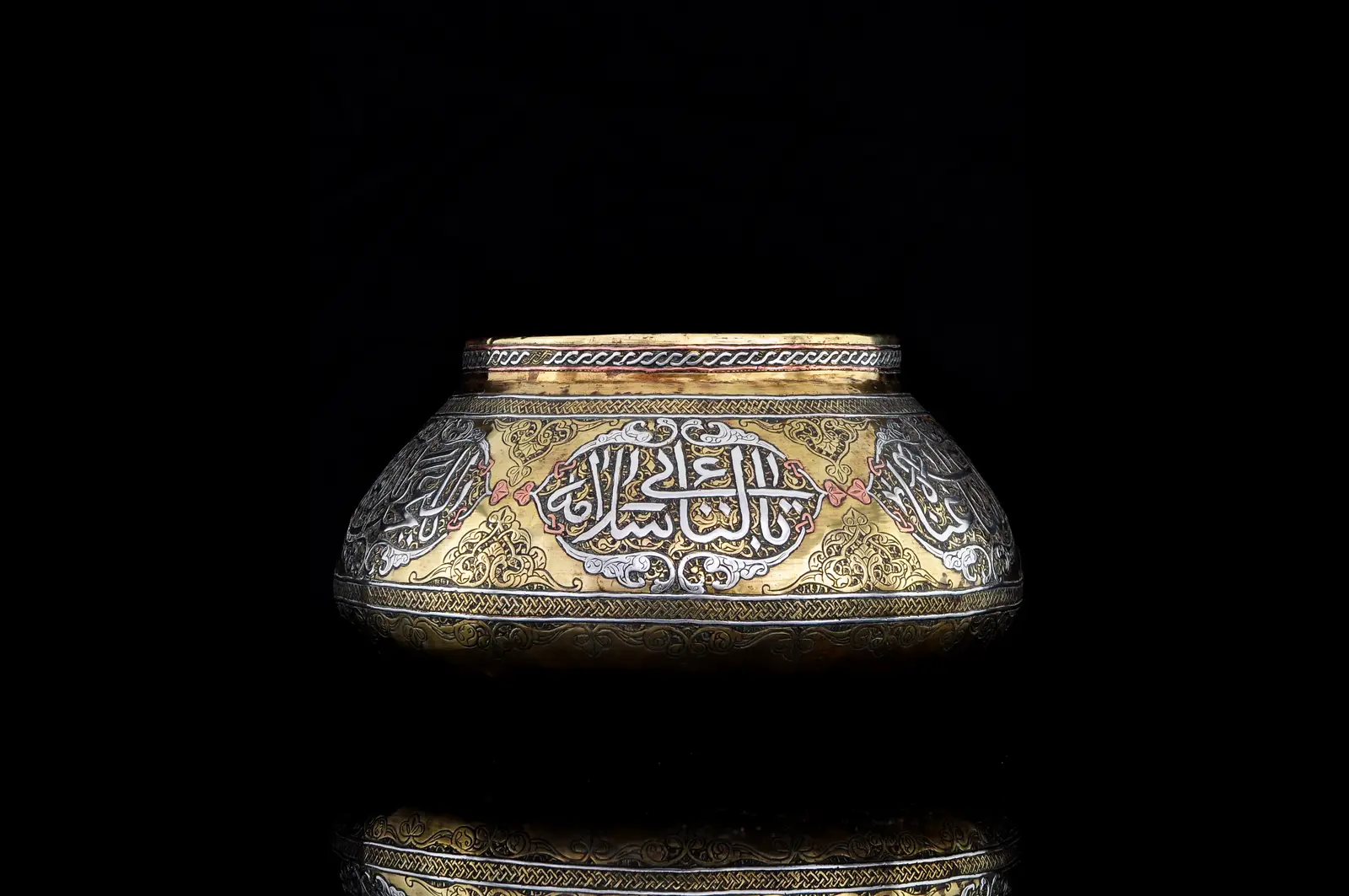
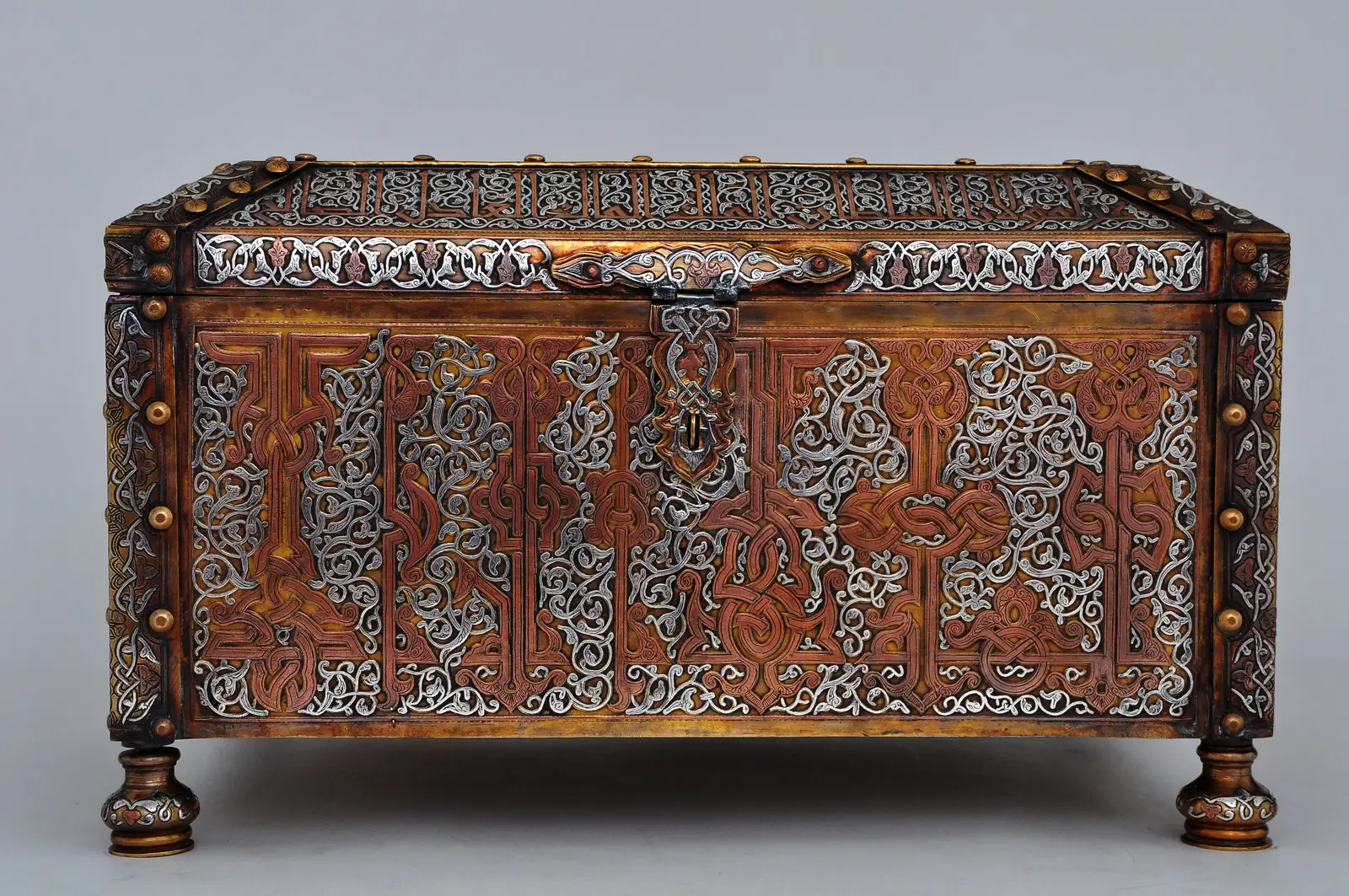
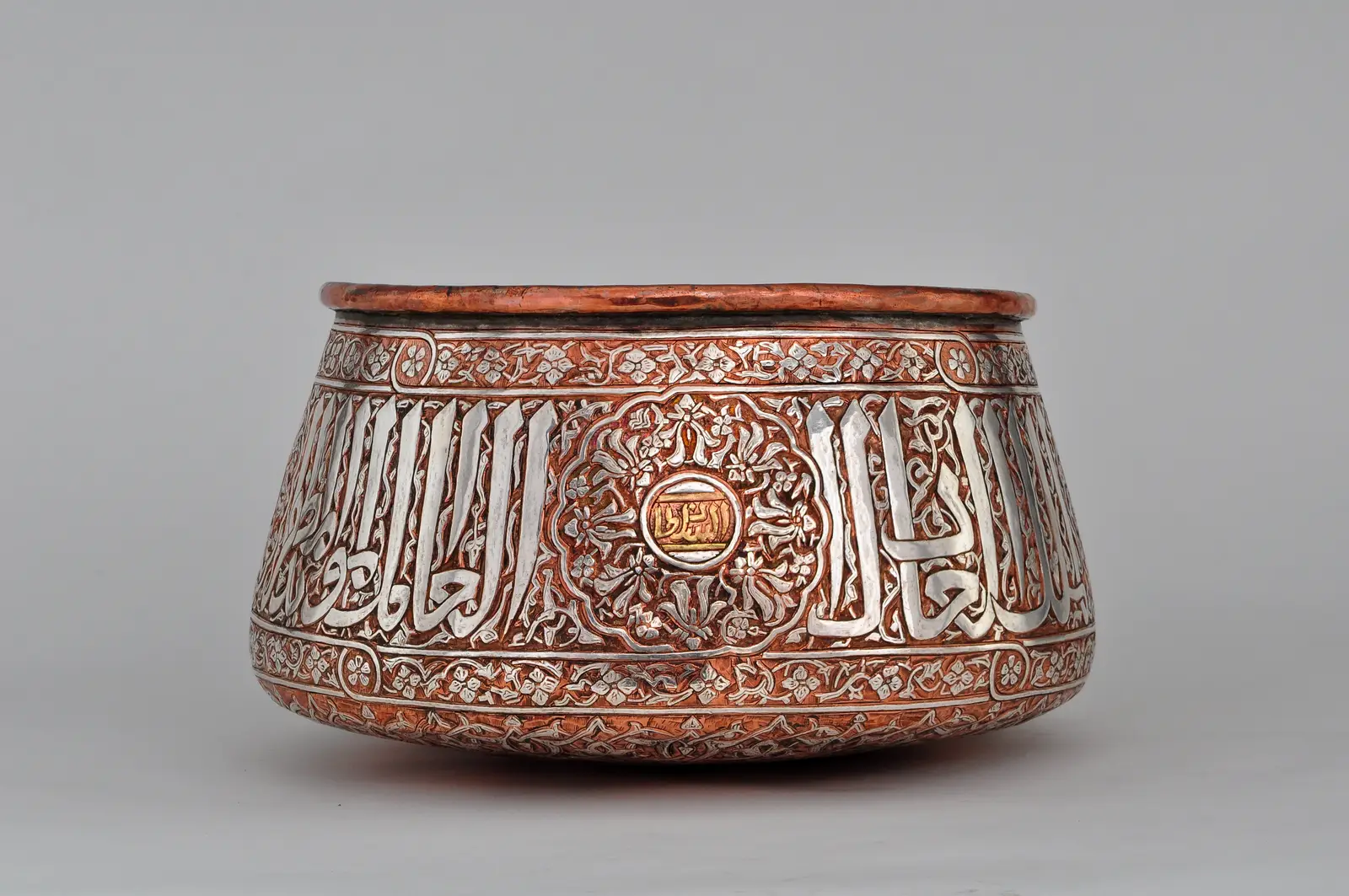
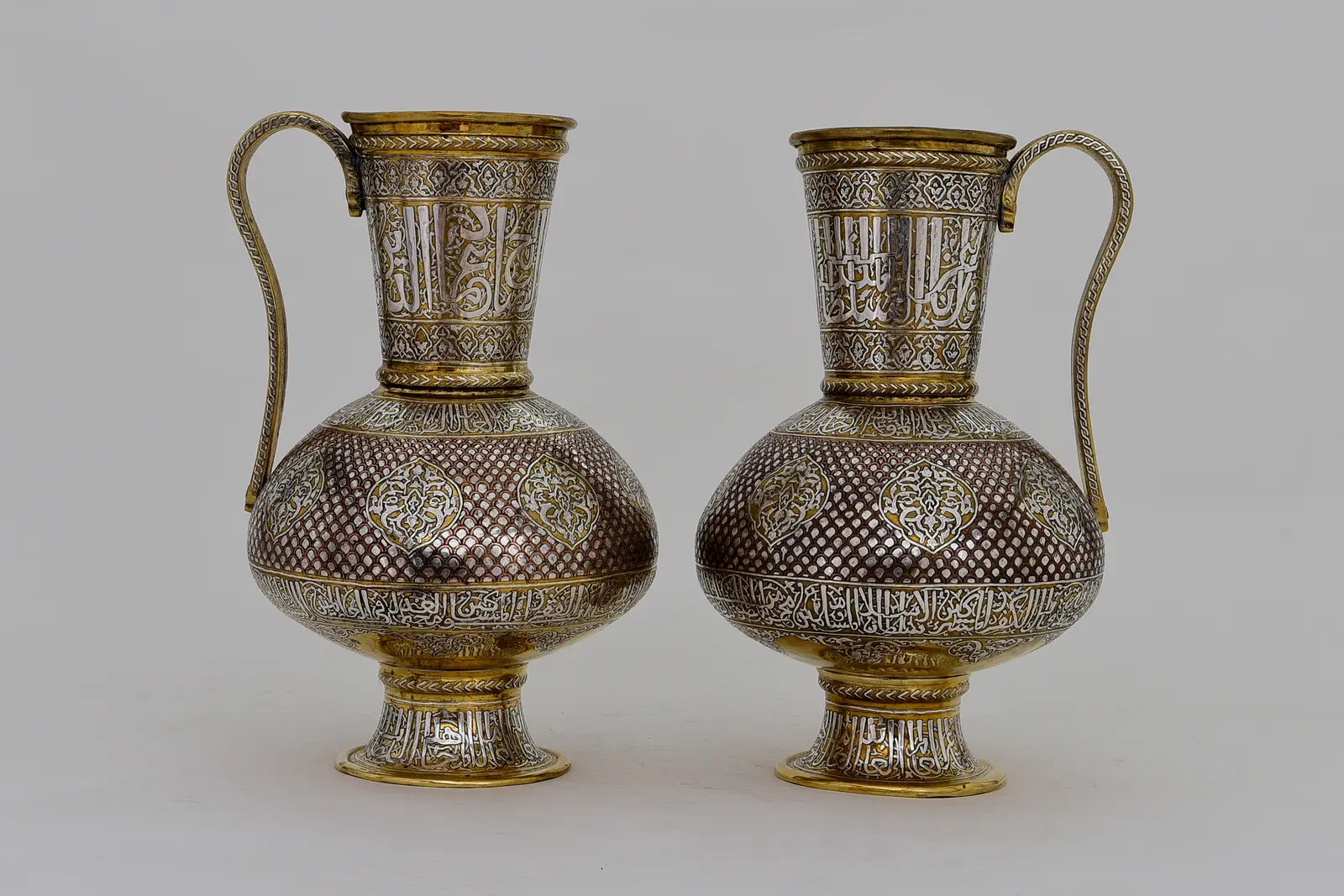
Material choice affects weight, color, strength, sound, corrosion, polish, and the ability to hold inlay or gilding. Museum records often list medium and technique together: "brass; engraved and inlaid with silver, copper, and black compound."
A zinc alloy bidri object and a brass Mamluk ewer both use inlay, but their bodies, colors, and chemical finishing are very different. Learning to separate base metal, added metal, surface colorants, and working method is essential.