Four ways to enter the world of Islamic metalwork.
Give visitors and editors a clear map of the 49-page structure.
Pathway 1: Time
The timeline pathway is for visitors who want historical sequence. It begins with late antique and early caliphal foundations, moves through Abbasid, Seljuk, Ayyubid, Artuqid, Mamluk, Ottoman, Safavid, Mughal, Deccani, and modern contexts, and emphasizes continuity as well as rupture.
Pathway 2: Technique
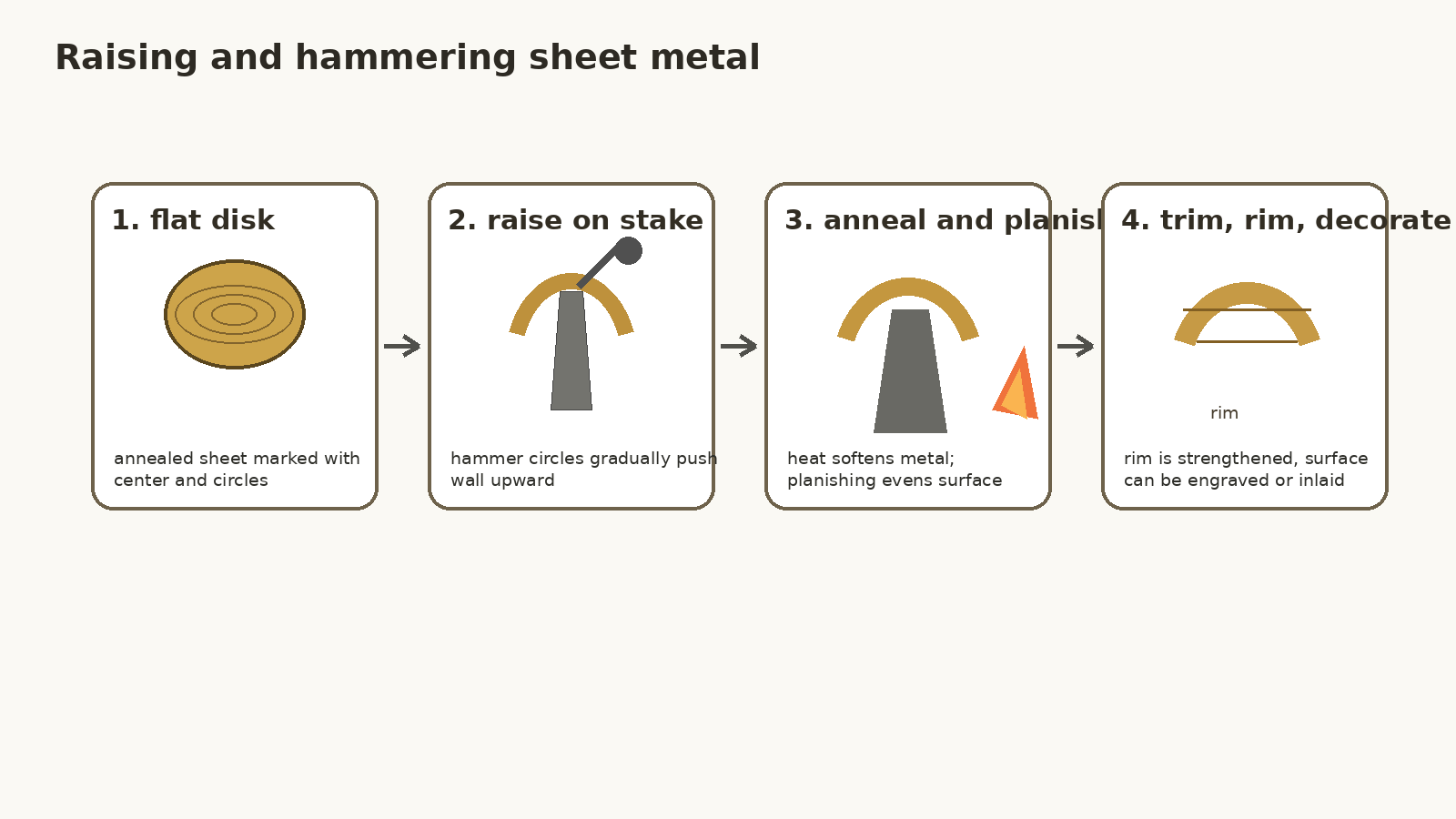
The technique pathway is the technical heart of the site. It explains manufacturing before decoration: mining, recycling, casting, raising, joining, engraving, piercing, inlay, damascening, black compounds, gilding, tinning, enamel, filigree, and workshop finishing. It makes clear why a single object can carry many technique labels.
Pathway 3: Place and Object
The regional and object pathways help visitors compare how water vessels, lamps, scientific instruments, arms, jewelry, coins, and hospitality wares changed from place to place. Object pages link back to regions and techniques so the site remains an interconnected reference, not a linear textbook.
Regional Network Map
Network diagram linking regions such as Arabia, Syria, Iraq, Iran, Egypt, Anatolia, Central Asia, Maghrib, South Asia, and Southeast Asia.