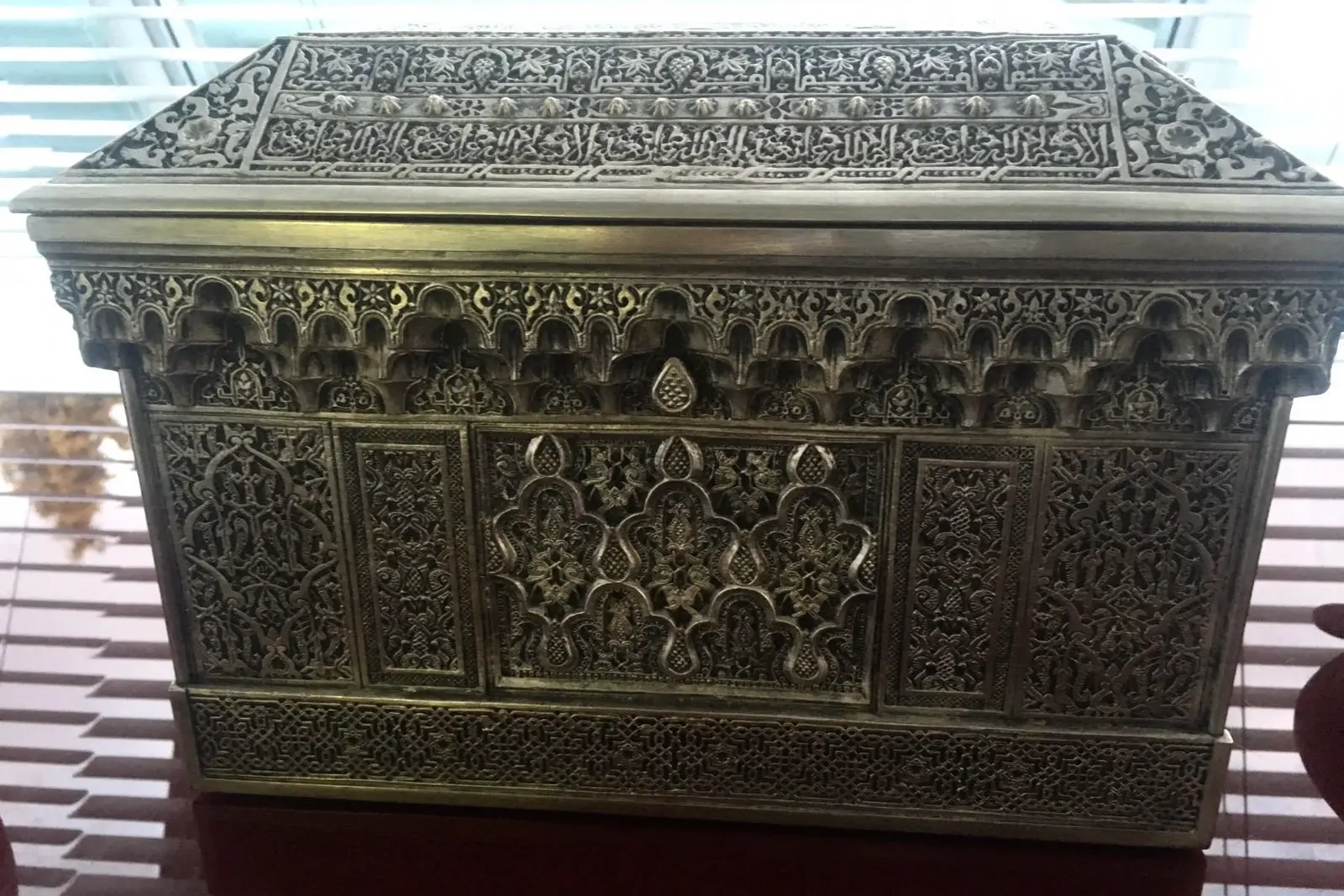
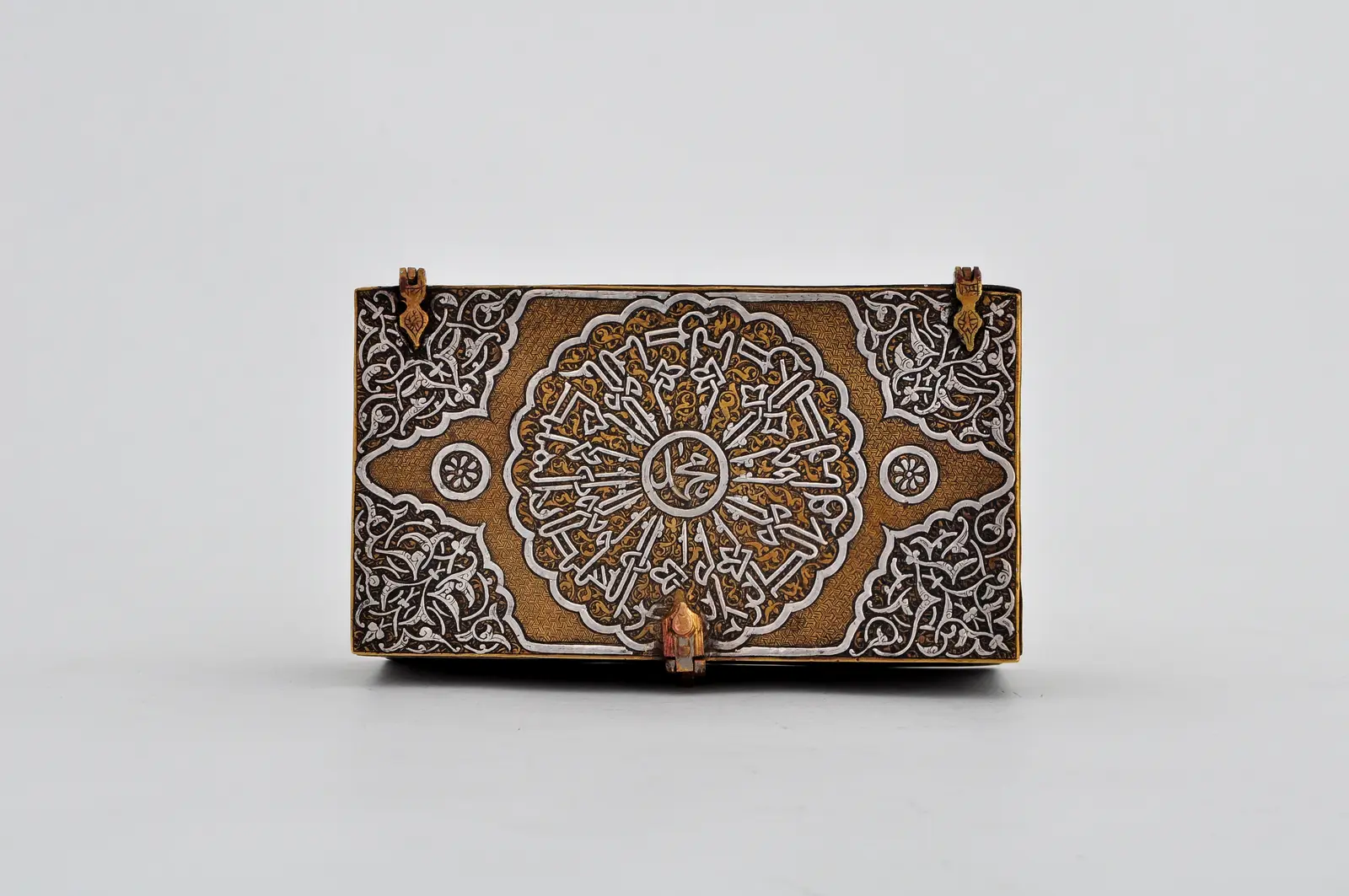
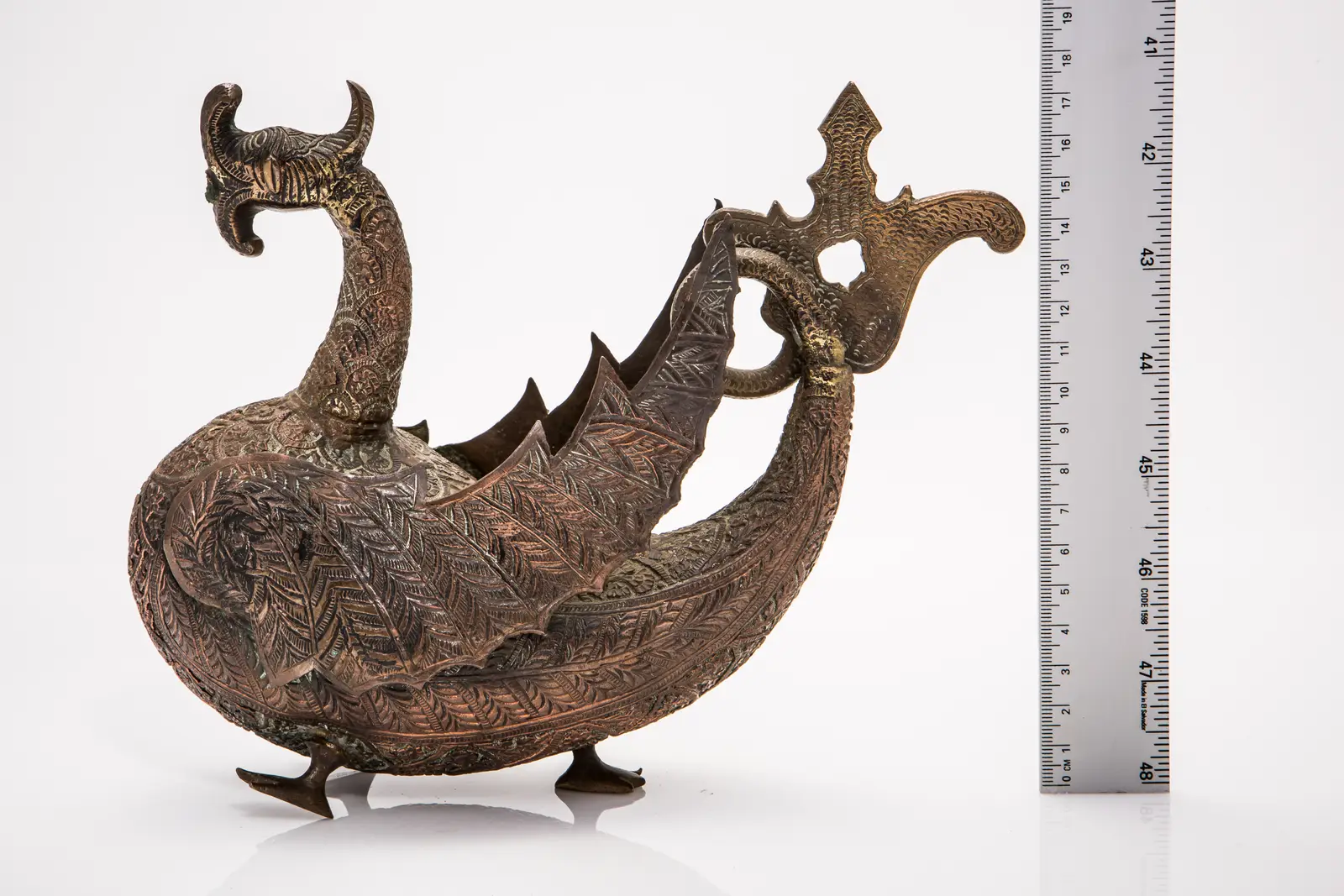
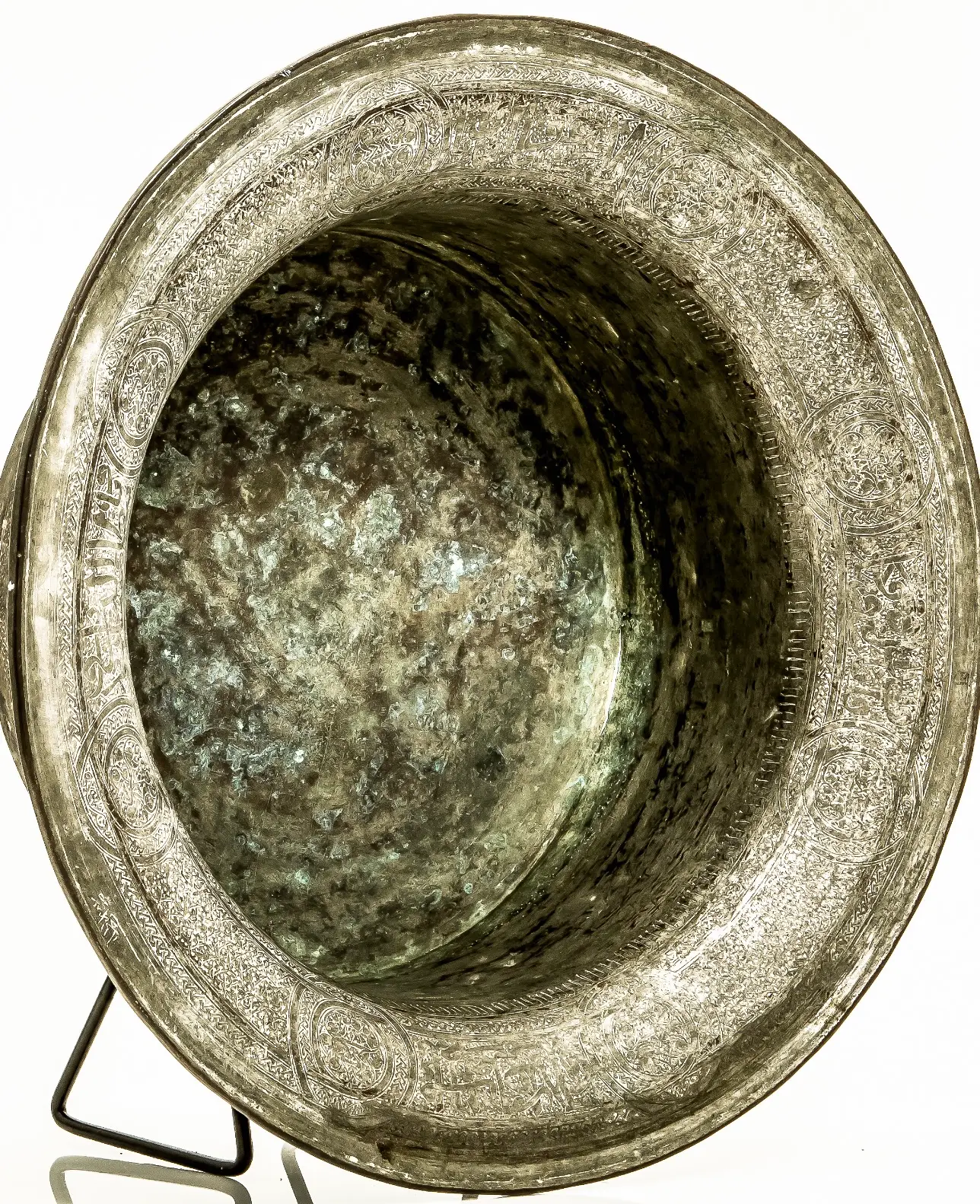
Gallery of The Collection
Hover to pause • Click to enlarge • Drag to scroll
How metal objects were made, decorated, repaired, and read.
The site teaches technique before asking visitors to interpret ornament. A basin is not only decorated with inscriptions; it is formed, annealed, hammered, trimmed, engraved, inlaid, darkened, polished, repaired, and sometimes reworked for new owners.
Technique Before Ornament
Technique pages build from shaping to surface, from body to detail. Most objects combine multiple techniques. A cast candlestick can be lathe-finished, chased, engraved, inlaid, and filled with black compound. A raised basin can be soldered, rimmed, engraved, and inlaid.
Each technique page uses plain-language definitions, step-by-step sequences, historic tools, evidence visible on objects, safety notes for modern replication, and museum examples.
The Core Question
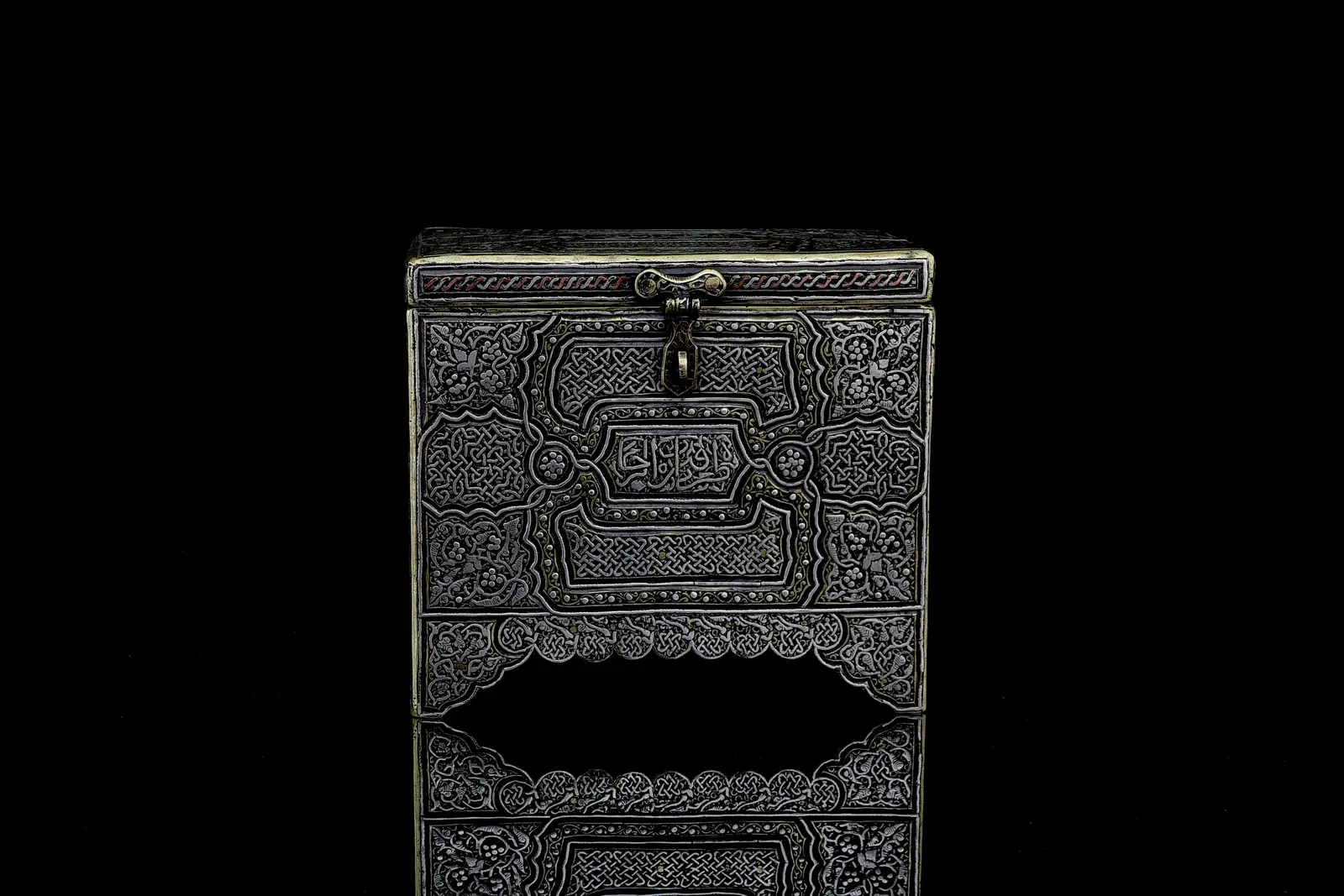
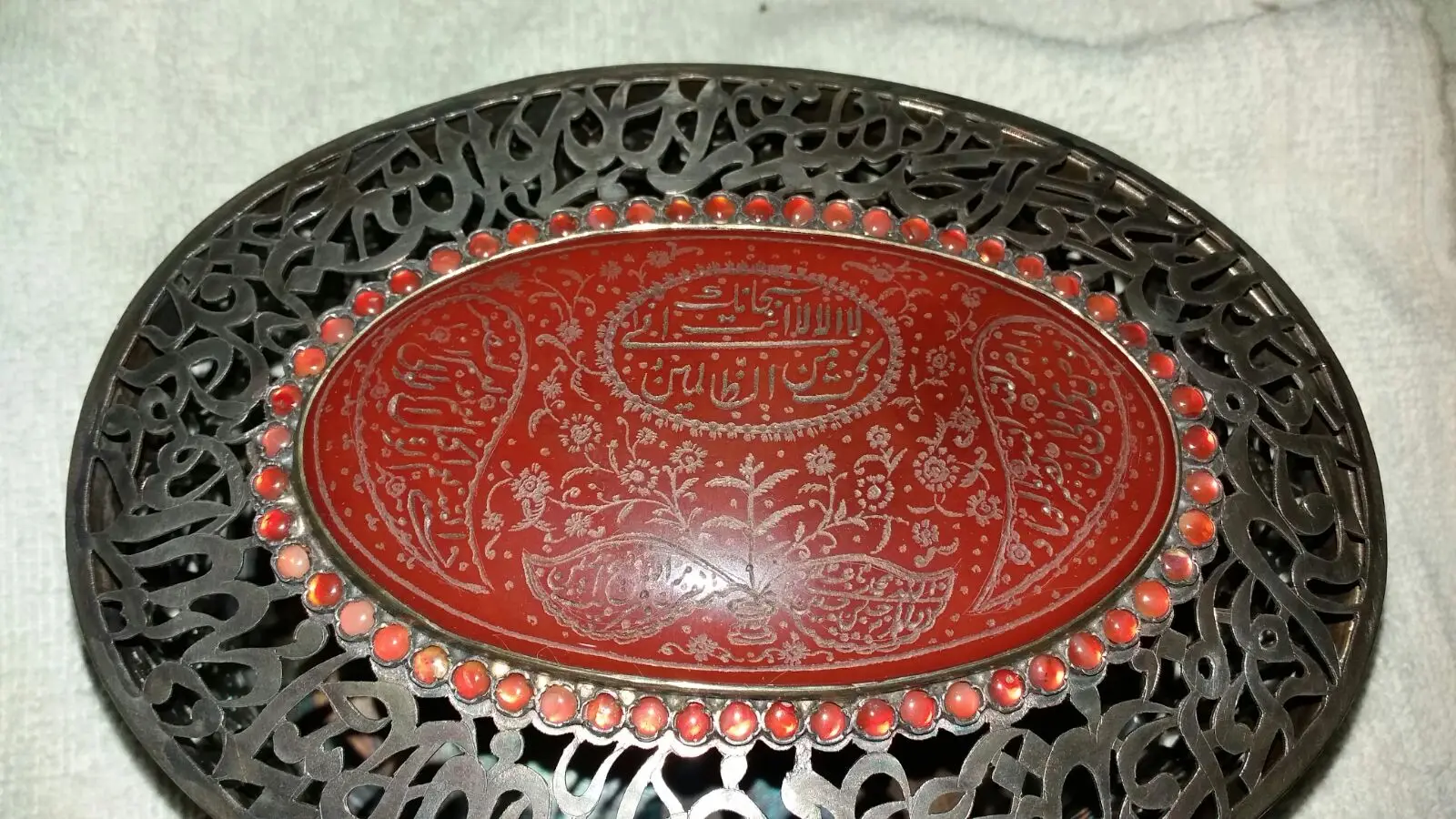
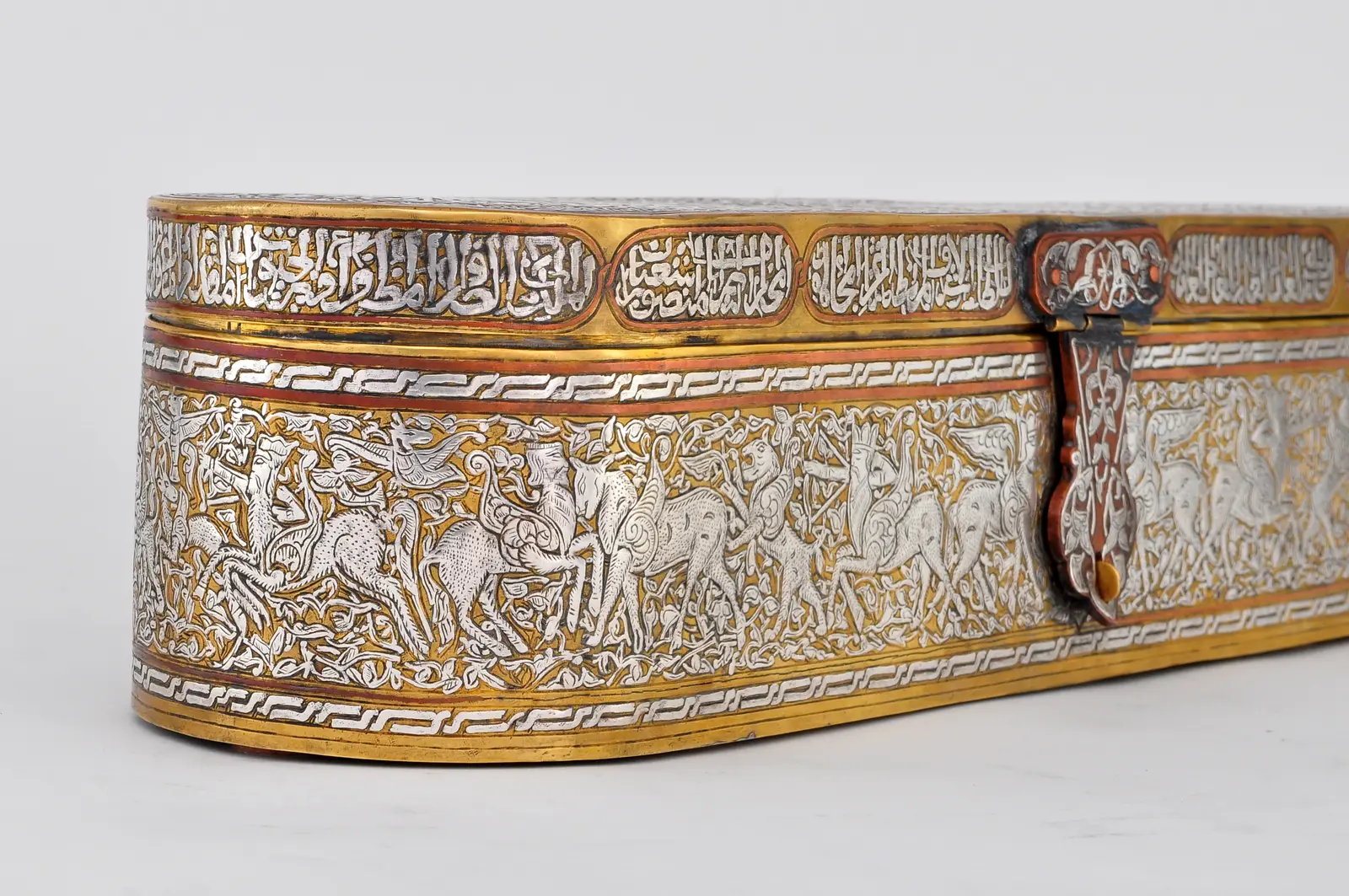
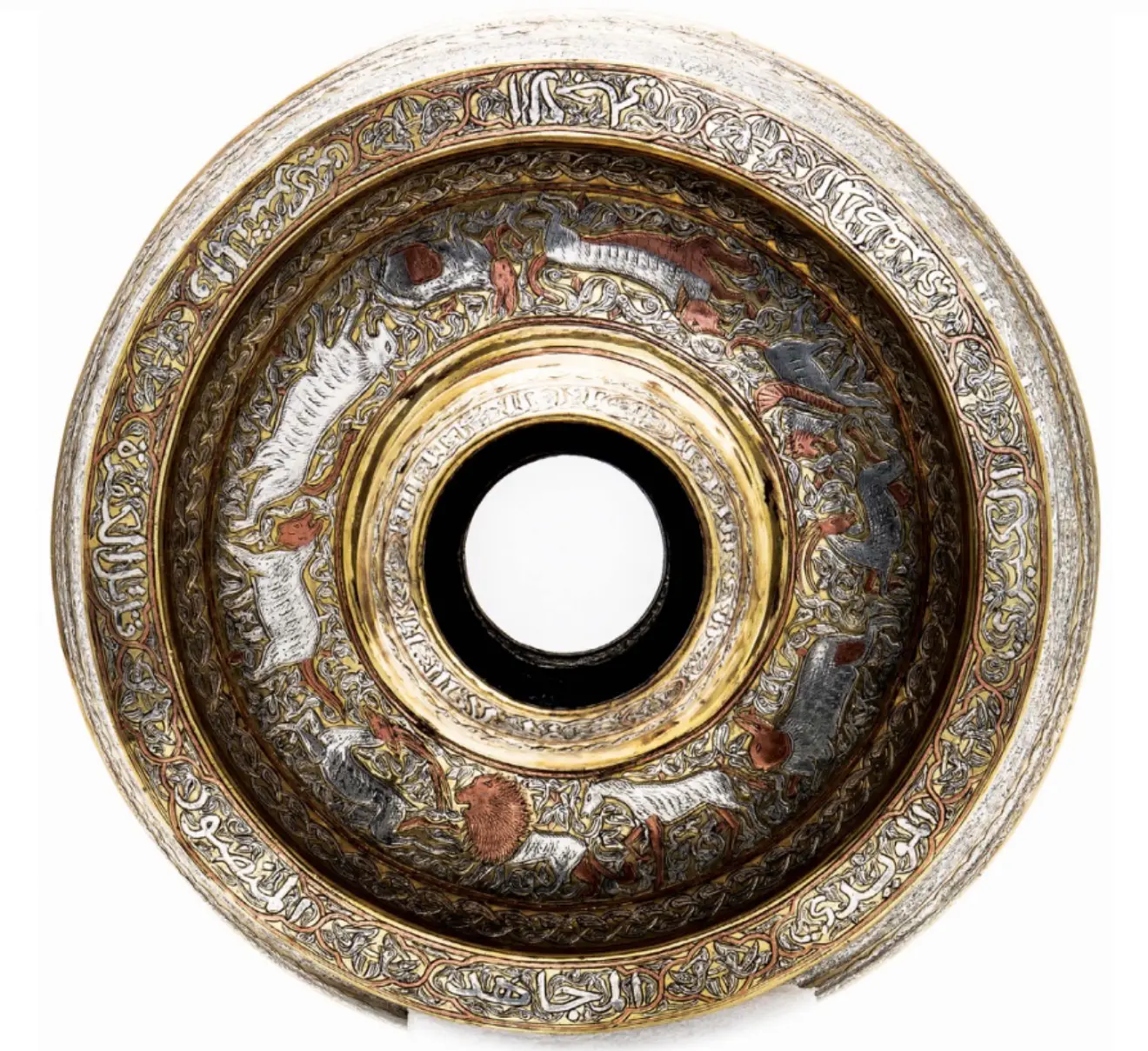
A museum label may say brass inlaid with silver, but that phrase hides a workshop sequence. Looking at seams, dents, missing inlay, solder, rim construction, and tool marks allows visitors to read metalwork as a record of human labor.
Eleven Manufacturing & Decoration Methods
Mining, Smelting, Recycling and Alloying
Before the workshop bench: ore, scrap, fuel, furnace, and alloy.
Casting and Mold-Making
From model to mold to metal body.
Forging, Raising and Hammering Sheet
Making volume from a flat sheet.
Chasing, Repoussé and Surface Modeling
Relief made by pressure, hammer, and support.
Engraving, Incision and Calligraphic Layout
The line that organizes the surface.
Openwork, Piercing, Sawing and Lathe Work
Cutting light through metal.
Silver, Gold and Copper Inlay
How precious metal becomes part of the surface.
Damascening, Koftgari and Overlay
Bright wire over dark steel.
Niello, Black Compounds, Patination and Tinning
Dark, white, and polished surfaces that change how metal is seen.
Gilding, Enamel, Filigree and Granulation
Gold-like surfaces and fine-scale brilliance.
Joining, Soldering, Riveting and Hinges
The hidden engineering of handles, lids, feet, seams, and repairs.
Visual Explanations
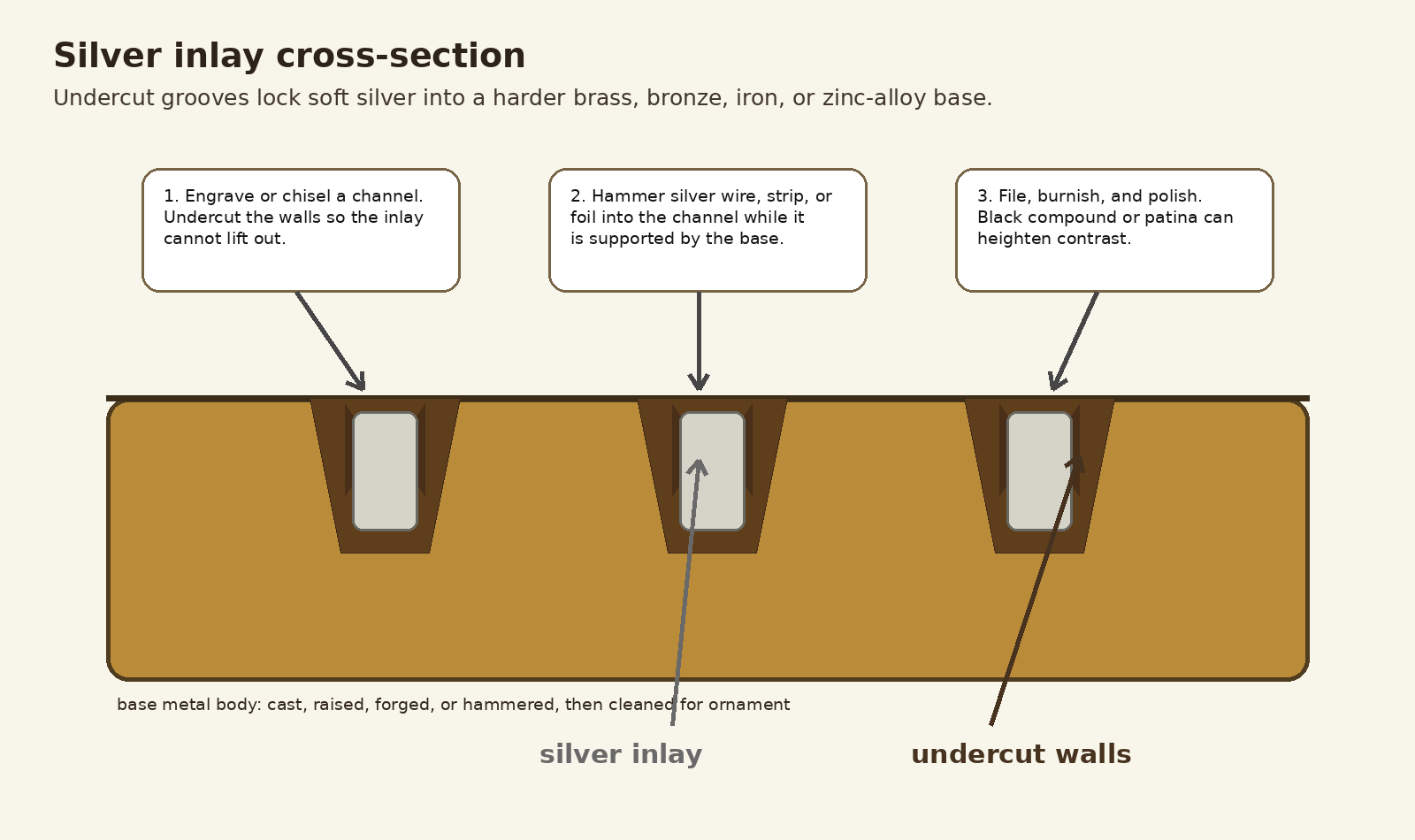
Diagrams show the hidden mechanics where photography alone cannot convey the process. These original diagrams were created for this site and require no third-party permissions.
Silver Inlay Cross-Section
Cross-section showing undercut grooves, inserted silver, base metal, and finishing stages.
Casting Workflow
Five-step casting workflow from model to mold, pour, and finishing.
Raising Sheet Metal
Four-step diagram of raising sheet metal from a flat disk to a vessel form.
A Layered Process
Every museum object card carries multiple technique tags because metalworking is a layered sequence:
Body Formation
Casting, raising, or forging the primary form
Surface Preparation
Planishing, annealing, trimming, joining parts
Design Layout
Planning inscriptions, medallions, bands
Decoration
Engraving, chasing, inlaying precious metals
Finishing
Polishing, applying black compounds, patination